The Trade That Changed Everything: Indie Drama Review
When the Numbers Finally Align
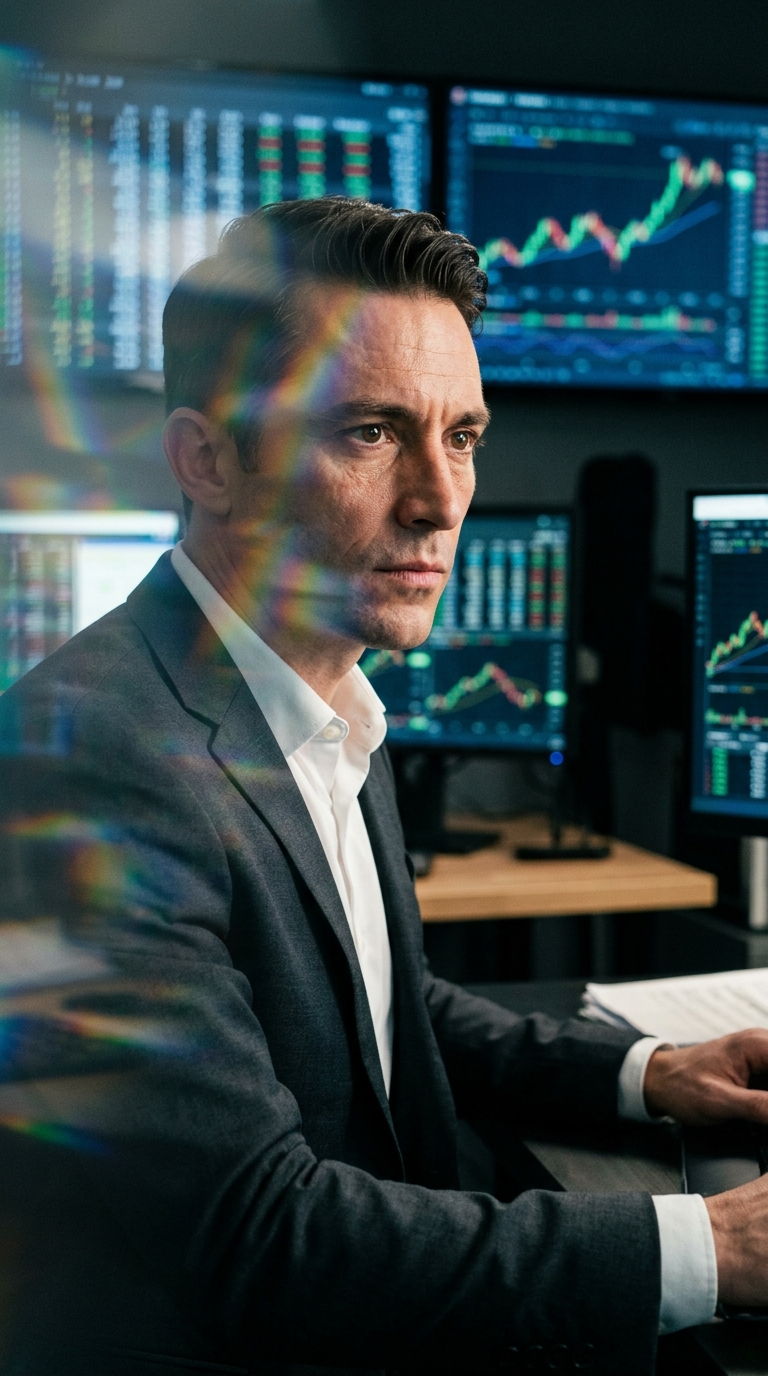
At 2:47 AM on a Tuesday, a day trader named Marcus sits bathed in monitor light, three screens casting blue shadows across his apartment. For three years, he's lived this nocturnal existence, watching patterns emerge from chaos, making calculations that carry weight beyond simple profit margins. This is the world of The Trade That Changed Everything, a short drama that understands obsession isn't glamorous—it's exhausting, isolating, and utterly consuming.
This indie short doesn't have the luxury of a two-hour runtime to ease you into its protagonist's psychology. It drops you directly into the moment when everything converges: when years of sleepless nights, missed connections, and single-minded focus either validate themselves or collapse entirely.
The Anatomy of Obsession in The Trade That Changed Everything
What makes The Trade That Changed Everything resonate isn't its financial jargon or market mechanics—it's the universal portrait of someone who's sacrificed everything for a singular vision. The synopsis reveals a character who has "lived in the glow of screens, tracking patterns others missed," and that specificity matters.
This isn't a film about trading. It's a film about the cost of expertise, the isolation that comes with seeing what others can't, and the terrifying moment when your entire self-worth depends on being right. The drama unfolds in that compressed timeframe where past decisions and future possibilities collide.
Visual Language of Isolation
Though director information remains unattributed, the visual approach suggests someone who understands how screen light functions as both illumination and prison. The glow that lets our protagonist see patterns is the same glow that separates him from daylight, from human connection, from any life beyond the next calculation.
Short films live or die on visual efficiency. Every frame must carry narrative weight. The description alone—"the numbers finally aligned in ways he had only imagined"—suggests a climactic visual moment where abstract data becomes emotionally concrete. It's the kind of cinematic restraint that indie filmmakers master out of necessity and that major studios often forget.
Why This Indie Drama Matters in 2025
The streaming landscape overflows with content about financial markets, from glossy prestige series to documentary exposes. The Trade That Changed Everything carves different territory by focusing on the psychological rather than the procedural. It's less The Big Short and more Pi, Darren Aronofsky's 1998 thriller about a mathematician consumed by pattern recognition.
That comparison reveals the film's indie DNA. Like the best low-budget dramas, it understands that tension doesn't require explosions or car chases—just a character pushed to their breaking point and a ticking clock. The three-year buildup compressed into one decisive night creates natural dramatic urgency.
The Indie Advantage
Major studios would demand backstory, romantic subplots, redemption arcs. The Trade That Changed Everything can afford to be singular in focus because it's unencumbered by committee notes and broad demographic targeting. It trusts viewers to understand obsession without hand-holding, to feel the stakes without exposition dumps.
This matters because streaming platforms increasingly dominate distribution, but homogenize content in the process. Independent shorts like this one remind us that cinema can be specific, can trust its audience, can explore one emotional truth deeply rather than several superficially.
The Scene That Defines Everything
Without spoiling the resolution, The Trade That Changed Everything builds toward a moment that any creative professional will recognize: when preparation meets opportunity, when years of work compress into seconds of action. The character has "tracked patterns others missed"—now he must act on that knowledge.
The drama lives in that gap between knowing and doing. Markets move in milliseconds. Hesitation means failure. But acting means committing everything to a vision only you can see. It's the writer staring at a blank page after years of false starts. The musician finally releasing the album they've endlessly refined. The filmmaker hitting "submit" on a festival application.
The trading context makes this archetypal moment specific and visceral. Money quantifies risk in ways that feel concrete—"every decision carried weight, every calculation held risk"—but the emotional stakes transcend finance. This is about belief in your own perception when the world offers no guarantees.
Technical Craft in Service of Story
Short films demand technical precision because there's no room for wasted motion. The Trade That Changed Everything appears to understand this at the script level, structuring its narrative around a single decisive night while carrying the weight of three years of history.
Lighting becomes character development—how the screen glow changes across the runtime can signal shifting mental states. Sound design likely oscillates between the clickety-clack of keys, the ambient hum of electronics, and oppressive silence. Even without dialogue (the synopsis suggests a largely internal journey), cinema can communicate volumes through atmosphere.
The Power of Implication
Notice what the synopsis doesn't tell us: whether the trade succeeds, what our protagonist sacrificed along the way, whether vindication brings satisfaction or emptiness. The Trade That Changed Everything seems to trust that the journey matters more than the destination, that obsession itself is the story.
This restraint distinguishes thoughtful indie work from content designed to satisfy algorithms. The film asks questions rather than providing easy answers, and that ambiguity creates space for viewers to project their own experiences with risk, isolation, and single-minded pursuit.
Where to Watch and Why You Should
Independent shorts face distribution challenges that features don't. They're too long for social media, too short for traditional theatrical runs, caught between platforms that don't quite know how to monetize them. This makes discovery crucial—when you find a short film that resonates, spreading the word matters.
The Trade That Changed Everything represents the kind of specific, character-driven storytelling that the indie film ecosystem depends on. Shorts serve as calling cards for emerging filmmakers, proof-of-concept for feature-length visions, and laboratories for testing narrative approaches without massive budgets.
For viewers, they offer concentrated doses of cinematic storytelling. No filler, no padding, just pure narrative efficiency. In an era when bloated streaming series stretch eight-hour stories across ten episodes, a taut short film that knows exactly what it wants to say feels refreshing.
The Indie Film Moment We're Living In
Streaming democratized distribution but complicated discovery. Anyone can upload content; breaking through the noise requires either massive marketing budgets or genuine word-of-mouth. The Trade That Changed Everything needs the latter—audiences willing to take chances on unfamiliar titles, to trust that specificity and craft matter more than star power.
This is how indie film ecosystems function: early adopters champion work that resonates, creating buzz that attracts wider audiences. Film festivals formalize this process, but digital platforms allow grassroots discovery. A single passionate recommendation carries more weight than a hundred generic ads.
The trade isn't just the one the protagonist makes on screen—it's the one viewers make when they choose focused indie storytelling over algorithm-driven content. That trade changes everything too.
Final Thoughts: Risk and Reward
The Trade That Changed Everything understands that drama emerges from characters making irreversible choices under pressure. It trusts viewers to engage with ambiguity, to find themselves in a protagonist whose specific obsession reflects universal human experiences. In just minutes, it explores themes that lesser films stretch across hours.
For anyone drawn to psychological drama, character studies, or indie filmmaking that prioritizes craft over spectacle, this short deserves attention. It's the kind of specific, committed storytelling that reminds us why cinema matters—not as background noise, but as focused artistic vision.
Ready to experience tense indie drama that doesn't waste a frame? Stream The Trade That Changed Everything and discover why specificity always beats spectacle. Sometimes the smallest films carry the biggest emotional weight—tune in and see what three years of obsession looks like when the numbers finally align.