The Last Broadcast Before Silence: Indie Drama Review
A Voice Crying Out in Dead Air
She had been broadcasting to empty frequencies for three months now, her voice traveling through dead air, seeking anyone still listening. The red light blinked on automatically at midnight, same as always. Tonight felt different though. Tonight, the silence on the other end seemed to answer back.
The Last Broadcast Before Silence isn't your typical apocalyptic short. There are no zombies, no explosions, no desperate supply runs through abandoned cities. Instead, this indie drama short offers something far more unsettling: the psychological unraveling of a woman who refuses to stop speaking into the void, even when the void has nothing left to say.
This is cinema stripped to its barest bones—one character, one location, and the crushing weight of isolation. It's the kind of film that film festival programmers champion and streaming audiences discover at 2 AM, unable to look away.
The Setup: Radio Waves and Existential Dread
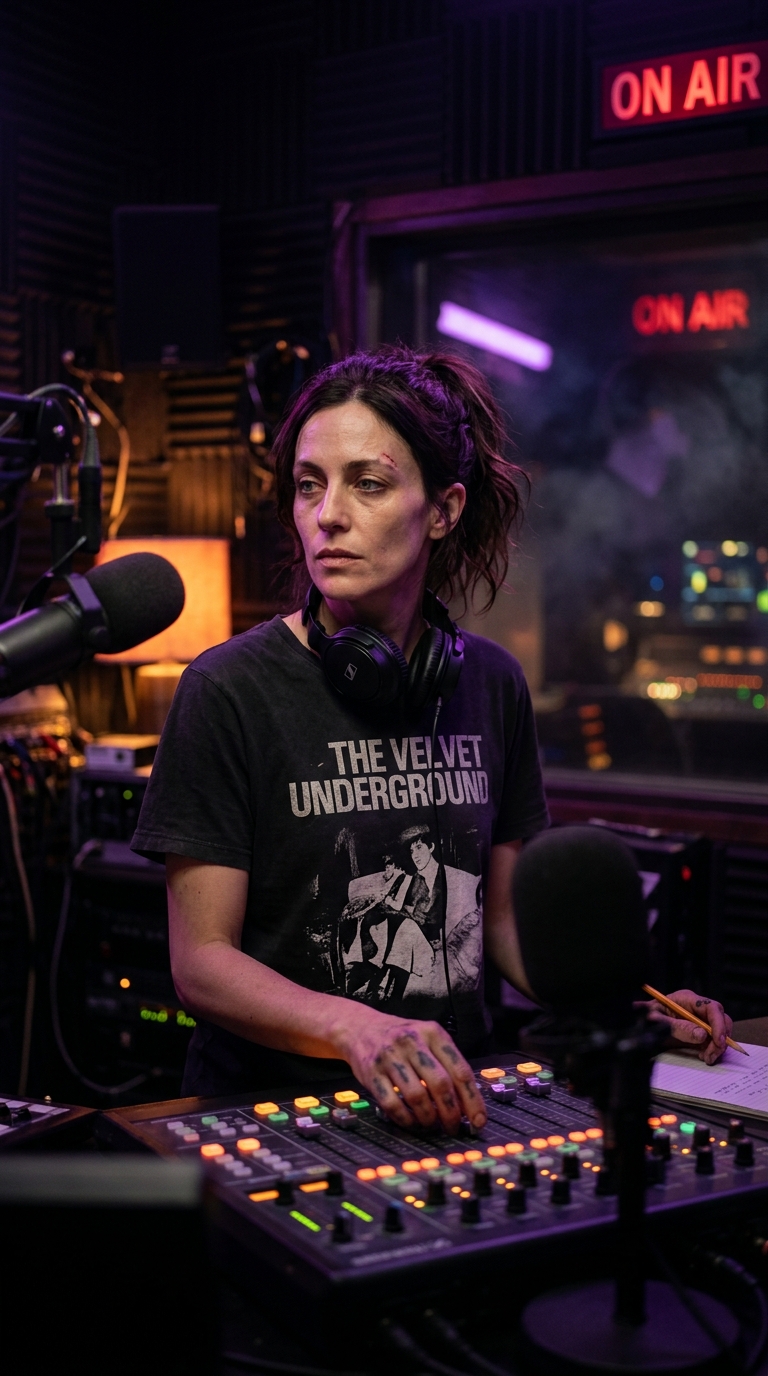
The Last Broadcast Before Silence opens with ritual. Our unnamed protagonist (we never learn her name, which feels deliberate) sits before vintage broadcasting equipment, adjusting dials with practiced precision. The ritual matters more than the result. She's been doing this nightly broadcast for three months since whatever happened... happened.
The drama unfolds not through exposition dumps but through behavioral details. Watch how she arranges her notes before speaking. Notice the way she clears her throat before the red light activates, maintaining professional standards for an audience that may no longer exist. These specifics ground the film in tactile reality even as its themes drift toward the existential.
The synopsis hints that tonight differs from the previous 89 broadcasts. That difference—that shift in the quality of silence—becomes the film's central tension. When you've been shouting into darkness long enough, does the darkness eventually shout back? Or do you simply go mad enough to imagine it does?
Themes Worth Broadcasting
Isolation as Character
The film treats isolation not as backdrop but as active antagonist. The Last Broadcast Before Silence understands that true isolation doesn't announce itself with dramatic music cues. It accumulates through small moments: the way her hand hovers over the broadcast button a second longer each night, the barely perceptible tremor in her voice when she says "good evening" to static.
This is drama that trusts its audience to read subtext. The film never explicitly states what catastrophe emptied the airwaves. That ambiguity serves the story—this could be pandemic, war, environmental collapse, or something stranger. What matters is the psychological reality of continuing routine when routine has lost all practical purpose.
The Need to Be Heard
Why keep broadcasting? The film suggests our protagonist continues not from hope of rescue but from something more fundamental: the human need to assert existence through communication. If no one hears her, does her voice matter? If she stops speaking, does she effectively cease to exist?
The Last Broadcast Before Silence poses these questions without offering easy answers. The drama emerges from watching someone grapple with meaning-making in a context that has rendered meaning obsolete. It's heady stuff for a short film, but the intimate scale keeps philosophy grounded in emotion.
Visual Language of Empty Spaces
Though we lack director attribution, the visual approach speaks clearly. The broadcasting booth becomes a character itself—cramped, cluttered with relics of analog technology, lit primarily by equipment LEDs and the infamous red recording light. The cinematography favors tight framing that emphasizes confinement.
Particular attention gets paid to light sources. That blinking red recording indicator becomes almost hypnotic through repetition, a mechanical heartbeat marking time in a world where time may have lost structure. When our broadcaster leans into the microphone, her face enters and exits pools of warm equipment glow, visually representing her oscillation between connection and isolation.
The sound design deserves equal praise. The Last Broadcast Before Silence uses silence as deliberately as it uses speech. The hum of equipment, the soft hiss of dead air, the subtle room tone that makes you aware you're hearing recorded space—these elements create texture that visual storytelling alone couldn't achieve. For a film about broadcasting, the audio landscape naturally carries enormous weight.
A Midnight Transmission: Imagining the Viewer
Picture this: It's 1:47 AM on a Tuesday. Sarah can't sleep again, scrolling through streaming platforms looking for something that matches her restless energy. She stumbles across The Last Broadcast Before Silence in an indie drama queue, clicks play without reading the synopsis.
Twenty minutes later, she's sitting in darkness with her phone face-down, completely absorbed. The film's unnamed broadcaster has been speaking for 18 minutes of screen time, and Sarah realizes she's been holding her breath during the silence between sentences. When that quality of silence finally shifts—when something might be listening back—Sarah feels it in her chest before the protagonist reacts on screen.
This is what effective indie drama accomplishes: it converts casual viewers into invested witnesses. Sarah finishes the film at 2:11 AM, immediately texts her film-nerd friend despite the hour: "You need to watch this."
That's the kind of organic discovery moment that builds cult followings.
Why This Matters for Streaming in 2024
The streaming landscape overflows with content, but The Last Broadcast Before Silence represents something increasingly rare: patient, understated drama that trusts audience intelligence. In an era of algorithm-optimized entertainment designed for distracted viewing, a film that demands attention and rewards focus feels almost radical.
The short format works perfectly for this story. At presumably 15-25 minutes (standard short film length), it delivers complete emotional arc without overstaying its concept. This isn't a feature idea stretched thin or a proof-of-concept for something larger. It's a complete statement, perfectly calibrated to its runtime.
For indie film enthusiasts, The Last Broadcast Before Silence offers exactly what the indie sector should provide: distinct voice, creative risk-taking within budget constraints, and thematic depth that mainstream productions often sand away in pursuit of broader appeal. This is cinema as art rather than product.
The Ending That Changes Everything
Without spoiling specifics, the film's conclusion recontextualizes everything preceding it. Whether the protagonist's final broadcast achieves connection or descends into delusion becomes deliberately ambiguous. The Last Broadcast Before Silence understands that the most haunting endings don't answer questions—they complicate them.
The final image (again, no spoilers) will stick with you. It's the kind of closing shot that prompts immediate re-watches as you reconsider earlier scenes through new understanding. Great drama earns its ambiguity through careful setup, and this film does the work.
Where to Watch and Why You Should
Check streaming platforms carrying indie short collections and festival lineups. The Last Broadcast Before Silence deserves to find its audience—the kind of viewers who appreciate slow-burn psychological drama and aren't afraid of films that value atmosphere over action.
If you're drawn to films like The Quiet Earth, Moon, or even Pontypool (which also uses radio broadcasting as narrative vehicle), this short operates in similar territory. It proves that compelling drama doesn't require elaborate production—just clear vision and commitment to emotional truth.
The film also serves as calling card for whoever directed it. The control of tone, the confident pacing, the willingness to sit in uncomfortable silence—these suggest a filmmaker worth following. Hopefully The Last Broadcast Before Silence leads to more opportunities and longer-form work from this creative voice.
Final Transmission
The Last Broadcast Before Silence stands as reminder that indie drama still has territory to explore, even in well-worn post-apocalyptic and isolation genres. By focusing on psychological intimacy rather than spectacle, the film carves space for itself in a crowded marketplace.
For film fans hungry for something beyond algorithm-generated recommendations, this short offers genuine discovery. It's not comfort viewing—it's the kind of film that creates slight unease, lingering after credits roll as you sit in your own silence wondering what you'd do in similar circumstances.
The unnamed broadcaster kept transmitting for three months because stopping meant admitting no one was listening. We're listening now. That has to count for something.
Tune In and Discover More
Ready to explore more indie gems like The Last Broadcast Before Silence? Stream the film and dive into our curated collections of underseen drama that deserves your attention. Don't let the algorithm decide what you watch—discover cinema that challenges, unsettles, and stays with you long after the screen goes dark.