Anup Raval's Forsaken: Indie Sci-Fi Horror Done Right
When Your Vacation Becomes Your Nightmare
There's something deeply unsettling about the promise of relaxation turning sinister. Anup Raval's sci-fi horror short Forsaken - You may leave but it follows understands this primal fear and exploits it with surgical precision. This isn't your standard cabin-in-the-woods thriller—it's a cerebral, suffocating descent into paranoia that borrows more from The Invitation than Friday the 13th.
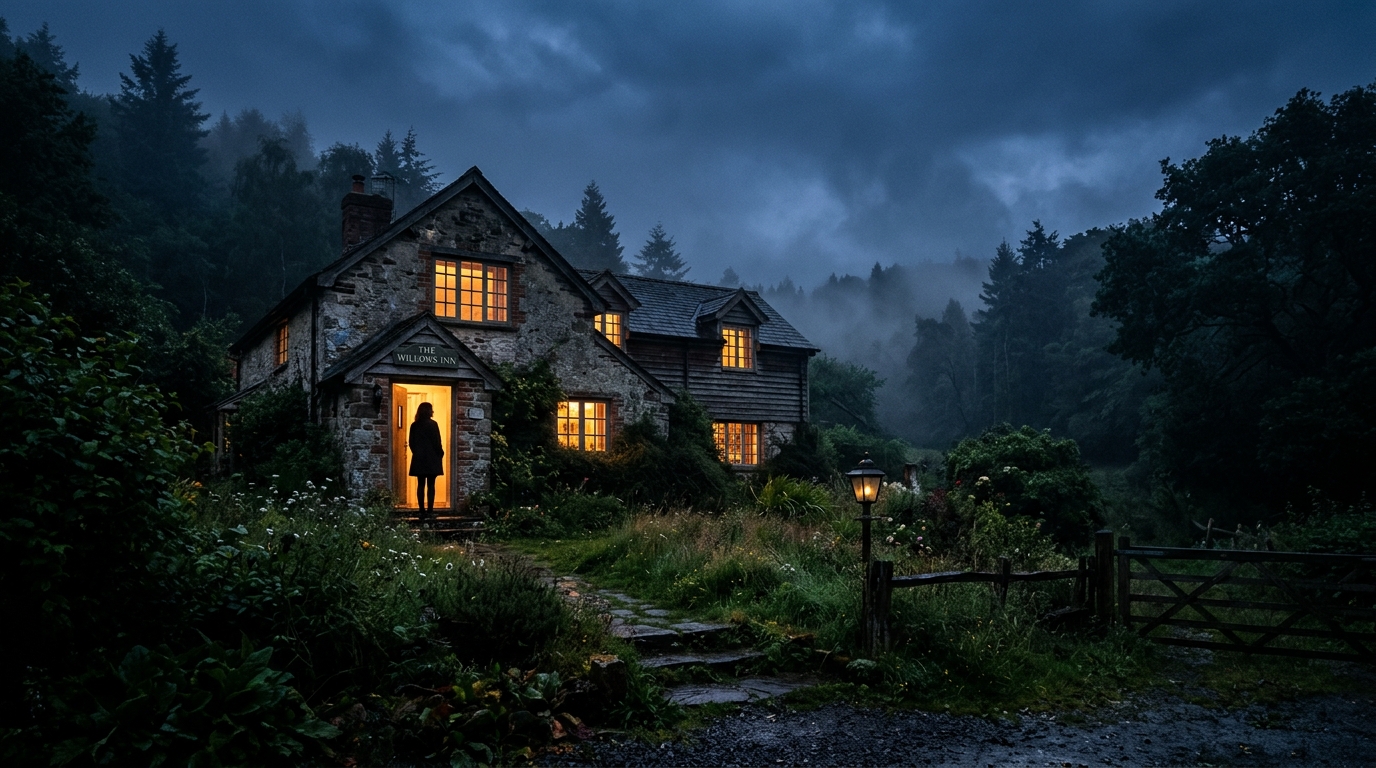
Raval, serving triple duty as director, writer, and sole cast member, has crafted something genuinely uncomfortable. The premise is deceptively simple: an exhausted city dweller checks into a remote bed and breakfast seeking respite, only to discover the hosts' hospitality masks something far more disturbing. But the execution—minimalist, atmospheric, psychologically dense—elevates Forsaken beyond typical indie horror fare.
The Claustrophobia of Isolation: What Forsaken Gets Right
A One-Man Show That Never Feels Empty
Let's address the elephant in the room: Anup Raval is the only credited performer, yet the film never feels like a vanity project or technical exercise. Instead, Raval's performance anchors the escalating dread with physical specificity—the way his character's shoulders drop upon arrival, the gradual tension creeping into his jaw, the thousand-yard stare when things go sideways.
This is method acting stripped to its essentials. No ensemble to bounce off, no dialogue to hide behind for stretches. Just one man, an increasingly hostile environment, and the camera's unflinching gaze. It's the kind of performance choice that either collapses under its own ambition or becomes the film's greatest asset. Raval makes it the latter.
Sci-Fi Horror With Actual Ideas
The "sci-fi horror" label gets slapped on anything with a spaceship or unexplained phenomena these days, but Forsaken earns the designation. Without venturing into spoiler territory, the film grapples with surveillance culture, the illusion of escape in our hyper-connected world, and what happens when hospitality becomes imprisonment.
The "it follows" portion of the title isn't just marketing—it's thematic DNA. Raval constructs a narrative where departure doesn't equal freedom, where the protagonist's attempt to leave one exhausting reality leads him directly into another, more sinister one. The film asks: in 2025, can we ever truly disconnect? The answer it provides is chilling.
Anup Raval's Visual Language: Influences and Innovation
Composition as Character
Raval's directorial eye reveals someone who's studied the masters. There are shades of Yorgos Lanthimos's unsettling symmetry, the oppressive negative space of It Follows (the title nod isn't coincidental), and the slow-burn paranoia of early Alex Garland. But Anup Raval isn't simply aping his influences—he's synthesizing them into something distinctly his own.
Watch how the bed and breakfast's interiors are framed. Early sequences present warm, inviting compositions—centered subjects, soft lighting, the visual grammar of safety. As the narrative shifts, so does the cinematography. Characters (well, character) drift to frame edges. Doorways and windows become visual traps rather than escape routes. The space itself becomes adversarial.
Sound Design That Does the Heavy Lifting
In indie horror, limited budgets often mean sacrificing either visual or audio quality. Forsaken splits the difference brilliantly. The sound design carries immense narrative weight—ambient countryside noise that slowly reveals artificial undertones, the hosts' voices (heard but strategically not shown) that hover just on the edge of uncanny valley, silence deployed like a weapon.
There's a moment midway through where the protagonist realizes something fundamental has shifted. No jump scare, no musical sting. Just the sudden absence of birdsong, replaced by a mechanical hum so subtle you question whether you're hearing it or imagining it. That's masterclass-level tension building.
Why Forsaken Matters for Indie Film in 2025
The One-Person Crew Revolution
Streaming platforms overflow with content, but Anup Raval's approach demonstrates that scarcity can be strength. In an era where indie filmmakers often feel pressured to compete with studio-backed productions, Forsaken succeeds by embracing its limitations. One location, one performer, maximum impact.
This is the film you show aspiring creators to prove that vision matters more than budget. Raval wrote, directed, and starred in a film that feels complete, considered, and genuinely unsettling—no small feat when most indie horror shorts feel like proof-of-concept demos rather than finished statements.
Genre Blending That Respects Both Genres
Too many "sci-fi horror" films are horror films with sci-fi window dressing, or sci-fi films with jump scares grafted on. Forsaken integrates both genres at the conceptual level. The horror emerges organically from the sci-fi premise; the sci-fi elements amplify rather than distract from the horror.
This matters because it signals a filmmaker who understands genre isn't a checklist of tropes—it's a toolkit for exploring ideas. Anup Raval uses horror's visceral immediacy and sci-fi's speculative distance to examine very contemporary anxieties about privacy, autonomy, and the impossibility of true escape.
Where to Watch and What to Expect
Streaming Accessibility
The film's trailer is available on YouTube, which likely means Forsaken - You may leave but it follows is making the festival circuit or preparing for wider digital release. For indie film fans, this is the discovery phase—the moment before a filmmaker breaks through, when you can claim you were there first.
Short films like this often appear on platforms like Vimeo On Demand, genre-specific streaming services like Shudder or Screambox, or even Raval's own channels. The key is tracking Anup Raval's social media and filmmaker profiles for distribution updates. This is a work that deserves to find its audience beyond festival programmers.
What You're Actually Getting
Expect a slow burn, not a roller coaster. Forsaken trusts audiences to sit with discomfort, to catch visual and audio cues rather than having everything explained through exposition. If your horror diet consists exclusively of Terrifier gore or Insidious jump scares, this might feel frustratingly opaque.
But if you appreciate horror that lingers—that makes you lock your doors and check your phone's permissions settings—Anup Raval has crafted something special. This is horror as thought experiment, sci-fi as cautionary tale, indie filmmaking as pure artistic statement.
The Verdict: Anup Raval Is a Name to Watch
Here's the concrete moment that sold me: Imagine it's 2 AM, you're scrolling festival shorts on your laptop, half-committed. Forsaken starts. Within five minutes, you've closed other tabs, turned off your phone, leaned closer to the screen. By the end, you're sitting in the dark, unsure whether to immediately rewatch or sit with the unease it's planted.
That's the mark of effective filmmaking. Anup Raval doesn't just want to entertain you—he wants to unsettle you, to make you question the transactional nature of hospitality, the surveillance embedded in modern life, the impossibility of truly leaving our problems behind. And he accomplishes this with minimal resources and maximum craft.
Forsaken - You may leave but it follows is the kind of indie discovery that makes digging through festival lineups worthwhile. It's proof that genre filmmaking can be intellectually rigorous without sacrificing visceral impact, that one-person productions can feel fully realized rather than limited, that Anup Raval is a filmmaker we should be tracking closely.
Experience Forsaken for Yourself
Ready to discover what makes Anup Raval's Forsaken one of 2025's most intriguing indie sci-fi horror shorts? Track down the film through festival screenings or upcoming streaming releases, and prepare for a cinematic experience that proves limitations breed creativity. Your next favorite filmmaker might just be one remote bed and breakfast away.