Anup Raval's Forsaken B&B: Sci-Fi Horror That Sticks
When a Countryside Escape Becomes Your Nightmare
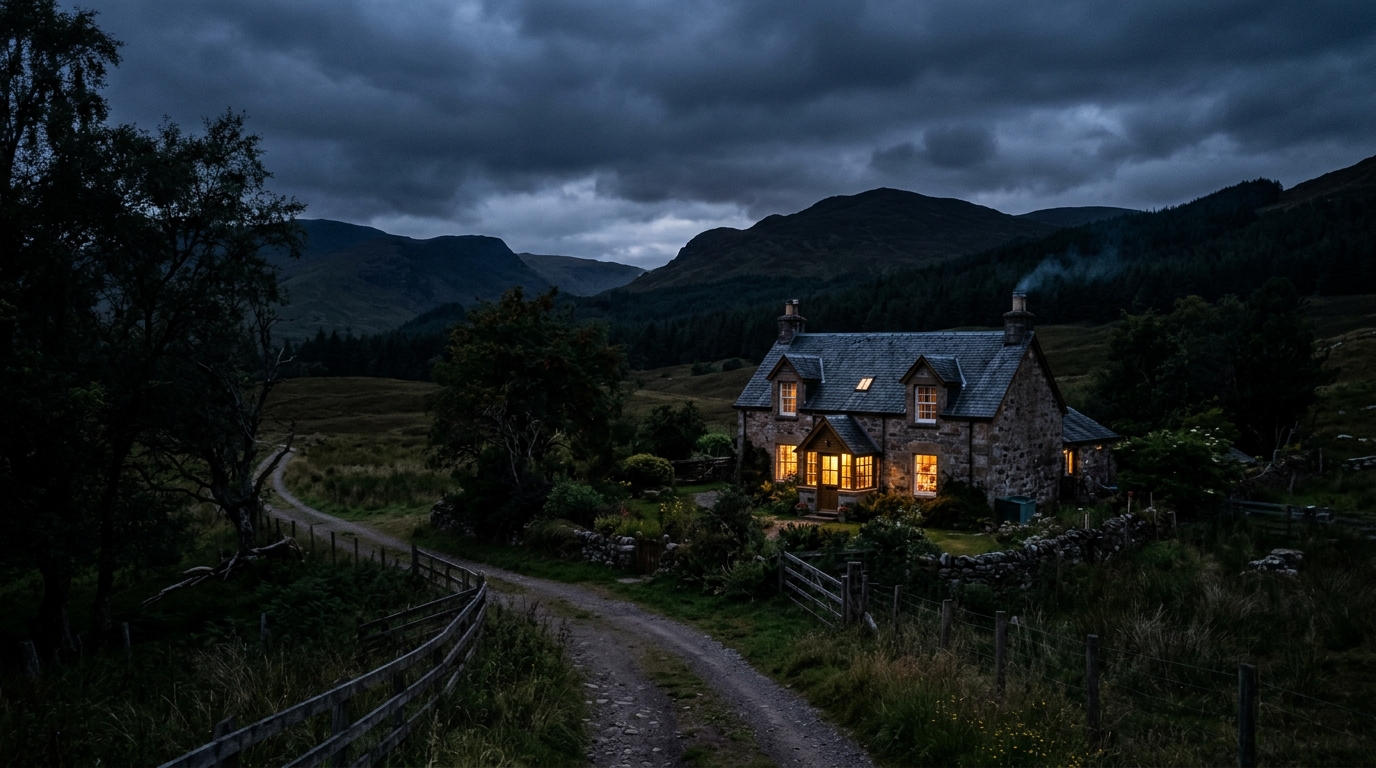
Anup Raval's Forsaken B&B - You may leave but it follows lands in the cramped space between psychological unease and genre horror, and it doesn't apologize for making you uncomfortable. This sci-fi horror short opens with a premise we've all fantasized about—ditching the city grind for a quiet countryside bed and breakfast—then systematically dismantles that fantasy with surgical precision. What starts as an overly attentive host offering fresh-baked scones devolves into something far more sinister, and Raval refuses to hold your hand through the descent.
This isn't your algorithmically-generated Netflix thriller. Forsaken B&B runs lean, with Raval himself anchoring the cast, and every minute of screen time earns its keep. The countryside setting—all pastoral charm and suffocating isolation—becomes a character in its own right, reminding us why folk horror never really left and why remote accommodations will forever fuel our collective paranoia.
The Plot Architecture: Tension Without the Safety Net
Raval constructs his narrative around a simple but effective hook: a weary tourist checks into a remote B&B seeking respite from urban exhaustion. The hosts seem perfect—maybe too perfect. Strange occurrences begin to puncture the idyllic veneer, but Raval smartly avoids the exposition dump that plagues so many indie horror shorts.
What makes Forsaken B&B compelling as a movie review subject is how Raval withholds information. We never get the full backstory served on a silver platter. Instead, the film operates on dread accumulation—small details that feel wrong, spatial geography that doesn't quite compute, interactions that land just slightly off-kilter. The "you may leave but it follows" subtitle isn't just marketing copy; it's a thematic mission statement about consequences, about how some places (and some traumas) don't respect checkout times.
The sci-fi element integrates subtly rather than announcing itself with exposition monologues or flashy CGI. This restraint serves the film beautifully. Too many indie genre pieces overreach their budgets and lose atmosphere in the process. Raval understands that suggestion and implication create more lasting unease than showing all your cards.
Anup Raval: Triple-Threat Auteur in Action
Raval wears three hats here—director, writer (implied), and lead performer—and that consolidation of vision shows in every frame. As director, he favors slow zooms and static wide shots that let spaces breathe and rot simultaneously. The B&B interiors feel simultaneously cozy and suffocating, all warm wood tones and shadows that pool in corners just a beat too long.
As the lead, Raval doesn't oversell the terror. His performance registers as naturalistic fatigue slowly curdling into paranoia. There's no "movie scream" histrionics here—just a person realizing incrementally that something fundamental has gone wrong with their reality. That restraint makes the eventual horror beats land harder because we've been lulled into trusting the film's grounded approach.
Raval's visual style suggests he's studied his folk horror canon—traces of The Wicker Man's pastoral menace, echoes of The Invitation's slow-burn dread, perhaps even some of Ben Wheatley's spatial disorientation from In the Earth. But Forsaken B&B doesn't feel derivative. It feels like a filmmaker digesting influences and metabolizing them into something personal.
Why This Movie Review Matters in 2025's Indie Landscape
The indie horror space is currently drowning in algorithmically-optimized content designed to trend on social platforms for 48 hours before vanishing. Forsaken B&B pushes against that disposability by prioritizing atmosphere over jump scares, implications over explanations. In a landscape where every short film desperately wants to be a feature-length proof-of-concept, Raval seems content to let this story exist as a short—complete, unsettling, and unapologetic about its brevity.
Streaming availability remains crucial for indie work finding its audience. With the trailer accessible via YouTube, Forsaken B&B follows the smart festival-to-digital pipeline that's sustained micro-budget genre work in recent years. The film doesn't need theatrical distribution to achieve its aims; it needs curious viewers willing to spend 15-20 minutes being genuinely uncomfortable.
This matters because truly independent genre filmmaking—work made outside even the "mini-major" indie studios—survives on word-of-mouth and passionate discovery. Films like Forsaken B&B remind us that you don't need a Blumhouse budget to generate real dread. You need vision, discipline, and a willingness to trust your audience's intelligence.
Scene-Specific Commentary: Where the Film Cuts Deepest
Without spoiling the trajectory, there's a moment midway through Forsaken B&B where spatial logic begins to fail. Our protagonist walks down a hallway that should lead to the exit but instead loops back to an interior room. Raval shoots this disorientation without flashy camera tricks—just a simple, terrifying realization captured in performance and blocking.
This scene encapsulates what works about the film's approach. The horror isn't supernatural spectacle; it's architectural impossibility. It's the dawning understanding that the rules we depend on—basic cause and effect, spatial consistency, the right to leave a place we've paid to stay—no longer apply. That's more disturbing than any creature design.
The sound design deserves mention here too. The film uses negative space brilliantly, letting silence stretch just past comfortable before introducing ambient sounds that feel slightly wrong—wind that doesn't match the window movement, footsteps that come from impossible directions. For a micro-budget production, the audio work demonstrates sophisticated understanding of horror mechanics.
The "It Follows" Inheritance
That subtitle—"you may leave but it follows"—obviously nods to David Robert Mitchell's modern horror classic It Follows. But Raval isn't just name-dropping for SEO juice. His film explores similar thematic territory: the idea that certain encounters, certain places, certain choices create consequences that don't respect geographical boundaries.
Where It Follows literalized this concept through a sexually-transmitted supernatural stalker, Forsaken B&B suggests something more abstract and potentially more insidious. The "it" that follows might be psychological, might be dimensional, might be a consequence of the location itself. Raval wisely leaves this ambiguous, understanding that defined threats lose power once fully explained.
Finding Forsaken: Where to Watch and What to Expect
Currently, the film's trailer lives on YouTube, which likely means festival circulation followed by wider digital availability. For indie genre enthusiasts, tracking down shorts like Forsaken B&B requires more active hunting than scrolling Netflix recommendations—which is precisely the point.
This is cinema for viewers who miss the thrill of discovery, who remember when "indie horror" meant genuine artistic risk rather than studio subsidiaries testing IP. Anup Raval has crafted something that respects your time while refusing to pander to your comfort. It's a sci-fi horror short that actually horrifies, that uses its sci-fi elements as framework rather than crutch, and that understands the power of ending before you've exhausted your premise.
If you're exhausted by algorithm-approved "elevated horror" that's neither elevated nor particularly horrifying, Forsaken B&B - You may leave but it follows offers a tonic: stripped-down, atmospheric, and genuinely unsettling. Sometimes the best movie review conclusion is simply this—the film works, it lingers, and it reminds us why we fell in love with indie genre work in the first place.
Your Next Watch Awaits
Ready to experience atmospheric sci-fi horror that trusts your intelligence? Track down Forsaken B&B and discover why Anup Raval represents the kind of focused, disciplined indie filmmaking that deserves your attention. Sometimes the scariest getaways are the ones you can never really leave—even after checkout.